
Why They Didn’t Believe You: The Silence Around ‘Credible Victims'
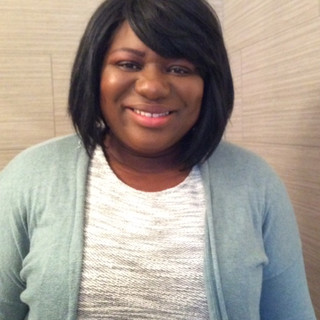
Hi, I’m Nada.
If you've ever shared your experience only to be met with doubt, silence, or blame, this is for you:

I believe you.
And I understand how confusing and painful it feels when others don’t.
Too often, survivors not only carry their trauma, but they also carry the burden of proving it.
They’re expected to fit a mold: cry in a certain way, report on time, seem “vulnerable” enough. But that mold is toxic, unrealistic, and deeply harmful.
🧠 The Myth of the “Perfect Victim”

Society still pushes the harmful idea that there’s a “right way” to survive abuse.
You’re expected to cry (but not too much), report right away, and have a perfectly consistent story.
If you show anger, confusion, or resilience, you risk being disbelieved.
As Emily Withnall (2024) explains, survivors are expected to be passive and broken. Anyone who steps outside that narrow image often faces skepticism, even when their reactions are normal trauma responses.
⚖️ When Systems Fail Survivors
In courtrooms, credibility is often judged by outdated expectations.
Camas Ussery (2022) highlights that Canadian sexual assault trials frequently fail to account for how trauma affects memory and behavior, leading to unfair credibility assessments.
🔁 The Reality of Victim‑Blaming

Victim blaming is still alarmingly common. Witte and Flechsenhar (2025) found that survivors are often blamed due to societal biases about how they “should” behave during or after an assault.
These harmful attitudes silence survivors and create additional trauma.
When survivors are blamed or doubted, it sends the message that they must perform their pain to cry, to look weak, to meet an impossible standard of being “the perfect victim.”
💬 “But You Didn’t Seem Like a Victim…”
Maybe you smiled.
Maybe you went back to work.
Maybe you stayed in the relationship.
None of that means it didn’t happen. It just means you coped in the way you needed to survive.
🌱 Releasing the Pressure to Prove

If you were disbelieved, that’s not a reflection of your truth; it’s a reflection of other people’s biases and the systems that failed you.
You don’t need to look or act a certain way to be valid.
Your story is enough exactly as it is.
And you never needed to perform your pain to deserve support.
💛 A Final Word from Me
At NJCCS, I offer a space where you are believed without conditions.
You don’t need to have the “right” words or tears to tell your story.
You are not too late. You are not too much. And you are never alone here.
📧 Contact me at info@nadajohnsonservices.com if this blog spoke to you.
Warm Regards,

Nada Johnson, MSW, RSW
Registered Social Worker, Psychotherapist / trained Family Mediator / EMDR Trained Therapist / Certified Racial Trauma Clinician / Mental Health & Sexual Violence Consultant / Professional Speaker

🌍Website: www.nadajohnsonservices.com
📩 Contact: info@nadajohnsonservices.com
Nada Johnson Consulting & Counselling Services - Online phone and video sessions available
Village Healing Centre: 240 Roncesvalles Avenue
C: 437-887-6146
Click here to join our newsletter and follow our platforms for empowering content, trauma recovery tools, and mental health support. Please share this post to help break the silence around trauma and promote healing in our communities. 🤝
📚 References
Ussery, C. (2022). The myth of the “ideal victim”: Combatting misconceptions of expected demeanour in sexual assault survivors. Appeal: Review of Current Law and Law Reform, 27, 3. https://canlii.ca/t/7hxtf
Withnall, E. (2024). The myth of the perfect victim. The Plentitudes. https://www.theplentitudes.com/piece/the-myth-of-the-perfect-victim
Witte, L. P., & Flechsenhar, A. (2025). "It's Your Own Fault": Factors influencing victim blaming. Journal of Interpersonal Violence, 40(9-10), 2356–2380. https://doi.org/10.1177/08862605241270030

Want More Support for Your Professional & Personal Growth?
🔷Try Potential Unlocked™
In addition to counseling, NJCCS offers coaching through our sister brand, Potential Unlocked™, designed specifically for professional women navigating career, leadership, and life transitions.
We support clients with:
Communication and conflict strategy in the workplace
Career development and leadership coaching
Navigating workplace dynamics and burnout recovery
Building confidence in both personal and professional relationships (Online dating empowerment coaching, because personal growth impacts professional life too!)
👉 Visit www.potentialunlocked.ca to learn more or book a free 10-minute consultation call.


Comments